
Bagnols-sur-Cèze
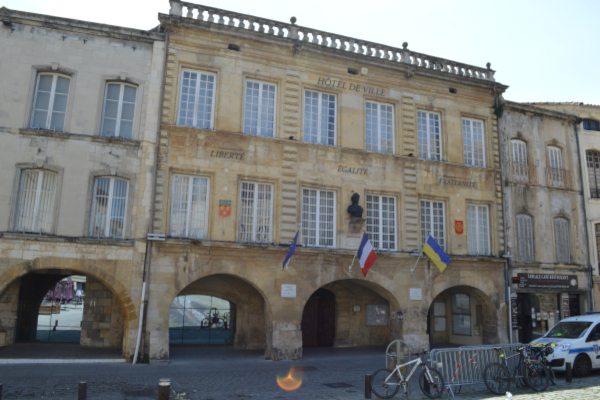
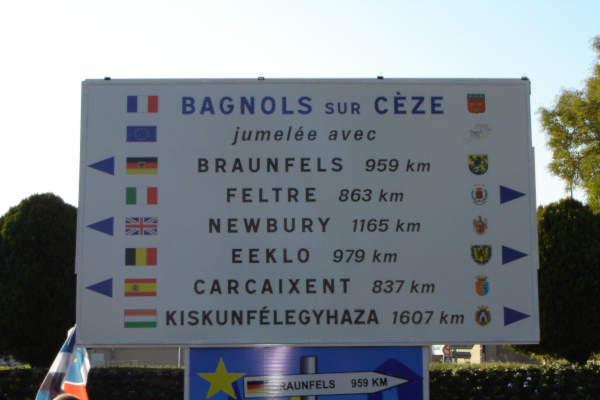
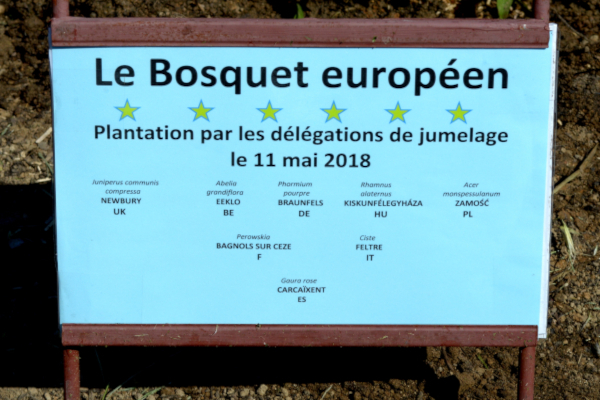
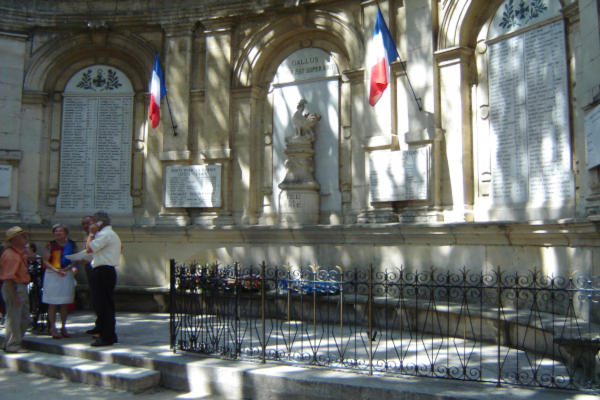
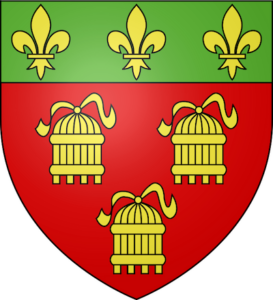
Bagnols-sur-Cèze (Occitan: Banhòus de Céser) is a French town located in the Gard department in the Occitanie region. It lies on the right bank of the River Cèze, a tributary of the Rhône, in the historical region of Languedoc, near the border with Provence. It is an important economic and cultural centre in the Middle Rhône area.
Founded by the Romans, Bagnols-sur-Cèze was originally a spa settlement (Balneolum), as its name suggests, deriving from the Latin balnearius (“place of baths”), indicating its significance as a thermal resort in Gallo-Roman times. By the fourth century, a sanctuary already stood on the site of the present-day church. Its strategic position along trade routes made it a focal point in the region.
In 1208, the first municipal charter was signed, greatly contributing to the town’s expansion around a castle. From 1223 onwards, it developed as an important agricultural and craft market. In the fourteenth century, Bagnols had to build fortifications to defend itself against the incursions of the Tuchins. It later endured the Wars of Religion, the Reformation, and severe outbreaks of plague around 1580. Despite these challenges, the town continued to prosper, and in the seventeenth century, the silk industry began to flourish.
In 1631, the Duke of Montmorency, governor of Languedoc and lord of Bagnols, rebelled against Louis XIII. Defeated, he was condemned and executed. In retaliation, the king ordered the demolition of the castle and town walls, which were later rebuilt in the eighteenth century to guard against possible Camisard attacks. The town continued to develop in the nineteenth century, expanding beyond its historic centre.
In 1891, at the request of the postal service, “sur-Cèze” was added to its name. After the Second World War, the town experienced rapid development with the establishment of the Marcoule nuclear facility, making it a key centre for the French nuclear industry.
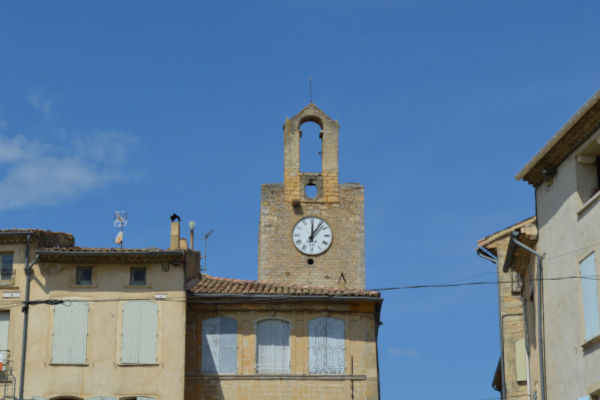
Although a small town, Bagnols-sur-Cèze offers several points of interest, including Place Mallet, the Church of Saint John the Baptist, the Albert-André Museum, and the Tour de l’Horloge. The nearby Pont du Gard is also a major attraction.
The Marcoule site, located near Bagnols, is one of the most significant nuclear research centres in France, managed by the Commissariat à l’Énergie Atomique (CEA). The surrounding area is also renowned for its Côtes-du-Rhône wine production and olive oil. Thanks to its proximity to Avignon and the Rhône Valley, the town attracts visitors interested in Roman history and natural landscapes.
The River Cèze, which flows through Bagnols, is known for its gorges and natural pools. The Albert-André Museum was established thanks to a friend of Renoir, who donated several Impressionist works to the town.

Our initiatives
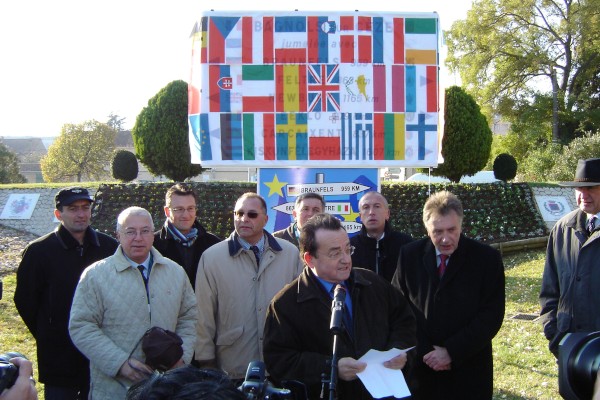
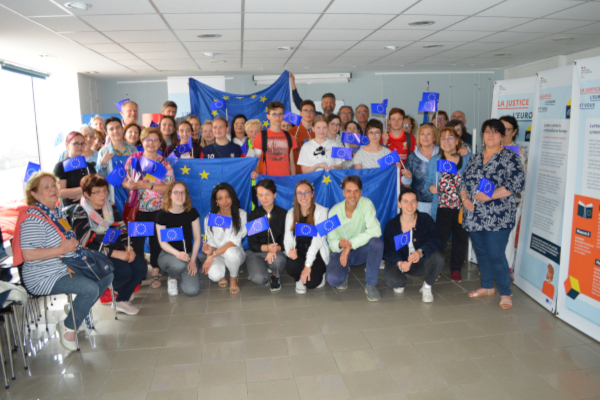
Europe day
9 MAY 2026
Description for this block. Use this space for describing your block.
Title for This Block
Description for this block. Use this space for describing your block.